So, have you heard of Natto? If you’ve spent even five minutes in Japan, you probably have.
It’s famous for three things: its sticky, stringy texture, a very “unique” smell (some say it’s like stinky socks, but let’s be nicer and call it earthy!), and its incredible health benefits.
To be honest, most people either love it or hate it at first bite. But in Japan, it’s a daily staple—served in school lunches, traditional inns, and found in every single supermarket. It’s the ultimate Japanese superfood that keeps us healthy.
Trust me, once you get past the smell, there’s a delicious, nutty flavor waiting for you. In this post, I’ll show you exactly how to tackle that tricky packaging and how to enjoy it like a local.

In a way, Natto is probably the most “famous” Japanese food for travelers—but mostly because of its reputation! Why? Because of the smell, of course. It has a very strong aroma and, let’s be honest, it looks a bit… strange. Curious yet? I hope so, because there is so much more to this dish than just its smell!
Actually, while not every Japanese person eats Natto every single morning these days, it is still deeply loved across the country. We add it to all kinds of meals, or sometimes, we just grab a pack and eat it as it is!
What is Natto? (The Japanese Superfood)
At its core, Natto is simply fermented soybeans. It’s made by soaking whole beans, steaming them, and adding a healthy bacteria called Bacillus subtilis. It’s been a staple of the Japanese diet for centuries, prized for being affordable, filling, and incredibly good for you.
Health Benefits
Why I personally swear by Natto
I don’t need a scientist to tell me Natto is good for me—I can feel it!
For example, whenever I feel constipated, I make sure to have some Natto. Without fail, the next morning, everything is moving smoothly! It really is a game-changer for my gut health. Plus, I’ve noticed that when I eat it regularly, my skin looks much clearer and glowing.
It’s not just a coincidence; Natto is packed with probiotics (good bacteria) that balance your gut and Vitamin K2, which is great for your overall health. It’s basically a natural multivitamin in a little plastic tub that actually works!
My secret for great skin and digestion isn’t expensive supplements—it’s just this 100-yen pack of fermented beans. The secret lies in the Nattokinase and probiotics it contains.
Nattokinase is a powerful enzyme that helps prevent blood clots and supports heart health. Additionally, it’s one of the best plant-based sources of Vitamin K2 for strong bones and probiotics for a happy gut. It’s basically a natural multivitamin in a little plastic tub!
The Taste & Smell (Is it really like wet socks?)
Let’s address the elephant in the room: the smell. Yes, it’s pungent. Some people compare it to aged cheese; others say it’s more like “old gym socks.” But don’t let that deter you! Once you get past the aroma, the flavor is actually quite mild, nutty, and savory (umami). It’s definitely an acquired taste, but once you’re hooked, you’ll crave it.
Don’t have steamed rice? No problem!
If you’re not in the mood for rice, try putting Natto on toast with melted cheese or folding it into an omelet. The heat slightly softens the smell, making it much easier to handle.
But if you want to eat it like a real local, here are my top 3 recommendations:
- The Classic Egg Mix: Just add a raw egg to your Natto and whip it up! It becomes incredibly creamy and delicious, and the egg actually mellows out the strong smell. Trying a raw egg is a quintessential Japanese experience you shouldn’t miss!
- The Curry Harmony: This might sound crazy, but I love putting Natto on Japanese curry and rice. The curry becomes slightly sticky and rich—the spiciness of the curry and the savory Natto create a perfect harmony!
- Natto Fried Rice: I often toss Natto into the pan when making fried rice. Stir-frying it makes the Natto a bit “toasty” and reduces the sliminess. It’s much easier to eat this way, but you still get all those amazing health benefits!
How to open and eat “Toro-mame” (The clever Mizkan package)
If you’re a beginner, look for “Toro-mame” (とろっ豆) by Mizkan. In the past, opening natto was a messy business with tiny plastic films and sticky sauce packets. But Mizkan changed the game with their “Paki-paki” lid. You just snap the lid in half, and the sauce pours out automatically. No messy fingers, no fuss!
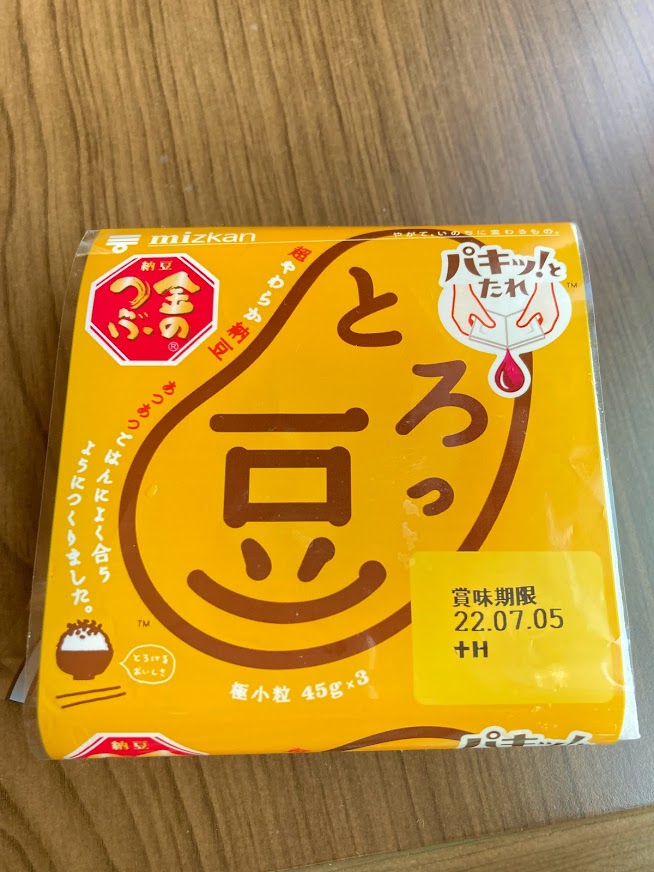
When you go to the supermarket, you’ll notice that one set of Natto usually comes with three individual packs. It’s very affordable—often around 100 yen for the whole set!
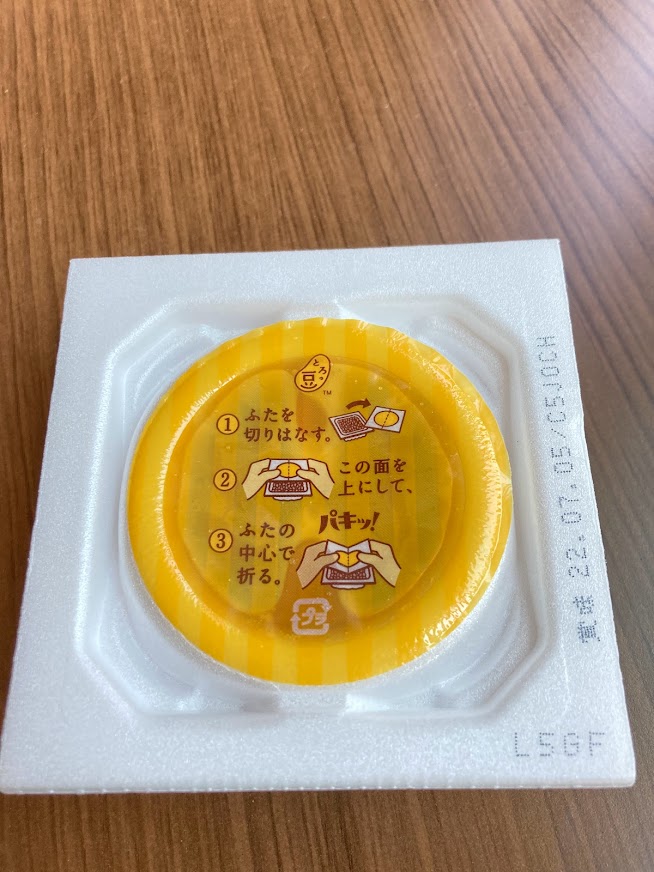
Usually, Natto comes with a thin plastic film between the beans and the lid. When you peel it off, the sticky beans cling to the film and get everywhere—it’s so annoying! But this ‘Toro-mame’ package is different. There’s no messy film at all.
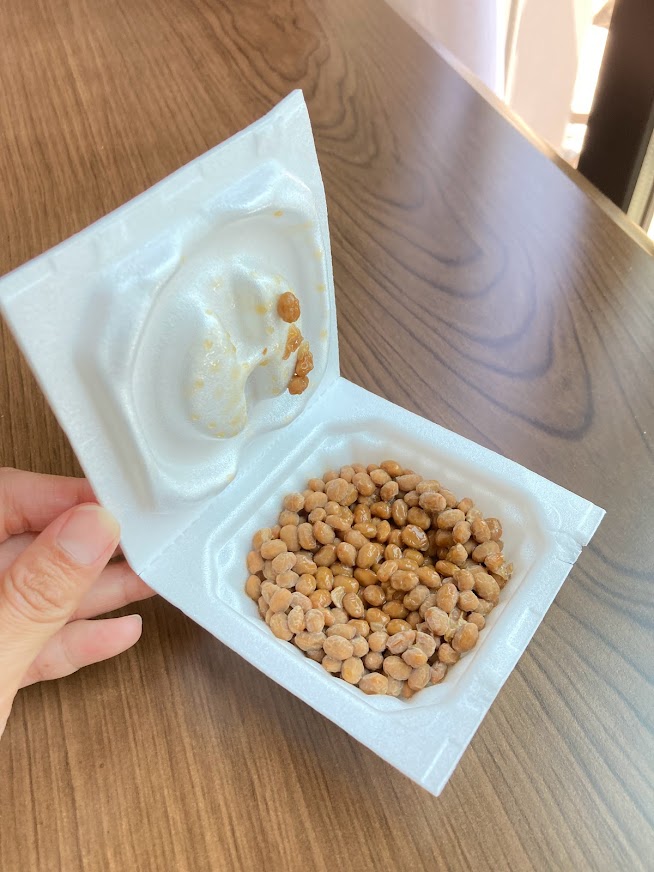
Instead of dealing with a messy film, you just detach the lid first.
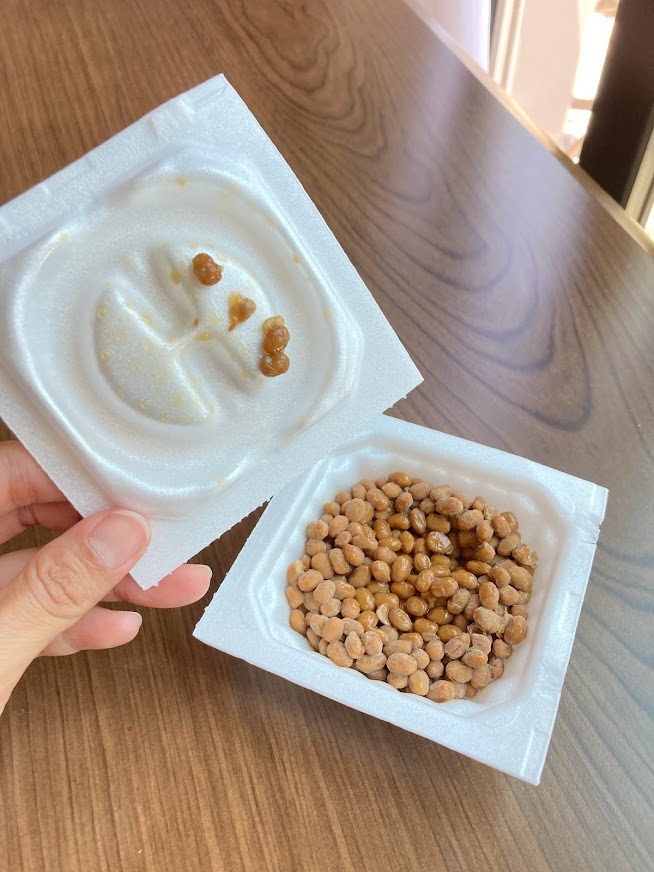
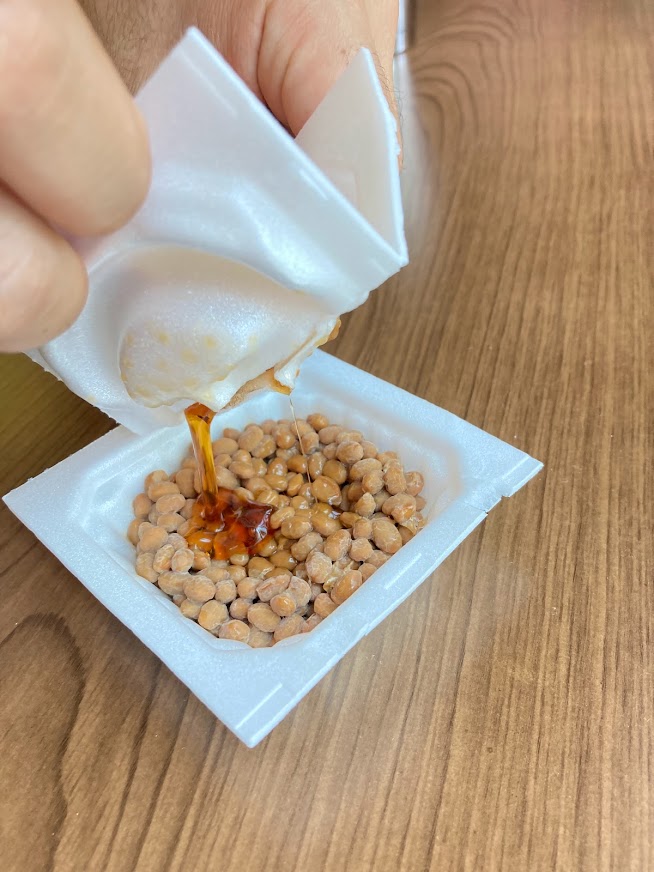
Once you detach the lid, just snap it in half—’Paki!’—and the sauce flows right out. Thanks to this genius package, you can add the sauce without getting your hands dirty at all. Normally, natto comes with a tiny sauce packet that’s a nightmare to open. You try to tear it, but the sauce ends up splattering everywhere! This ‘Paki-paki’ lid fixes all of that.
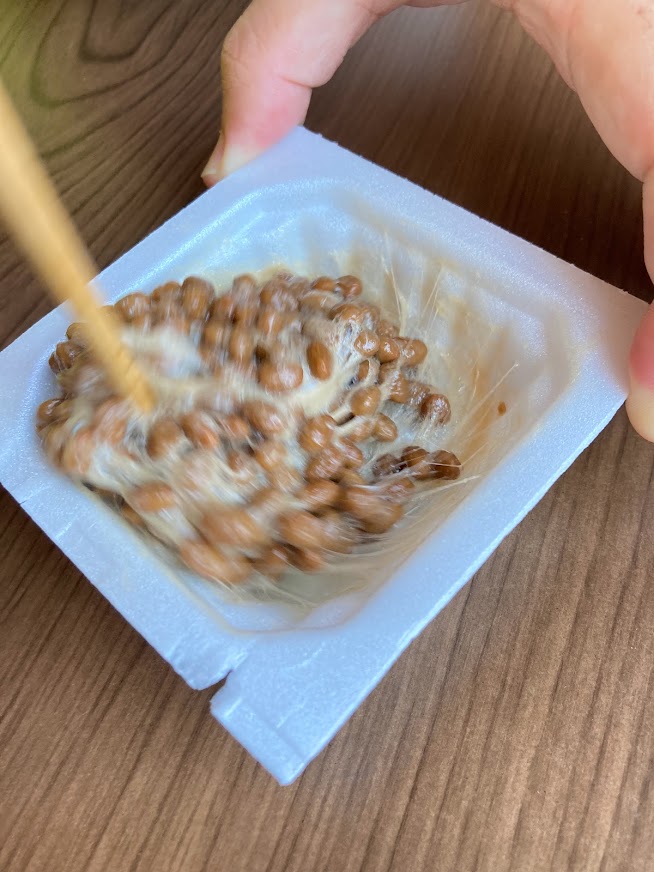
And don’t forget the most important part: mix it like crazy! The more you stir, the creamier it gets. You’ll see it turn into a white, fluffy foam that makes the texture so much better and more delicious. I recommend stirring at least 50 times for the perfect consistency!
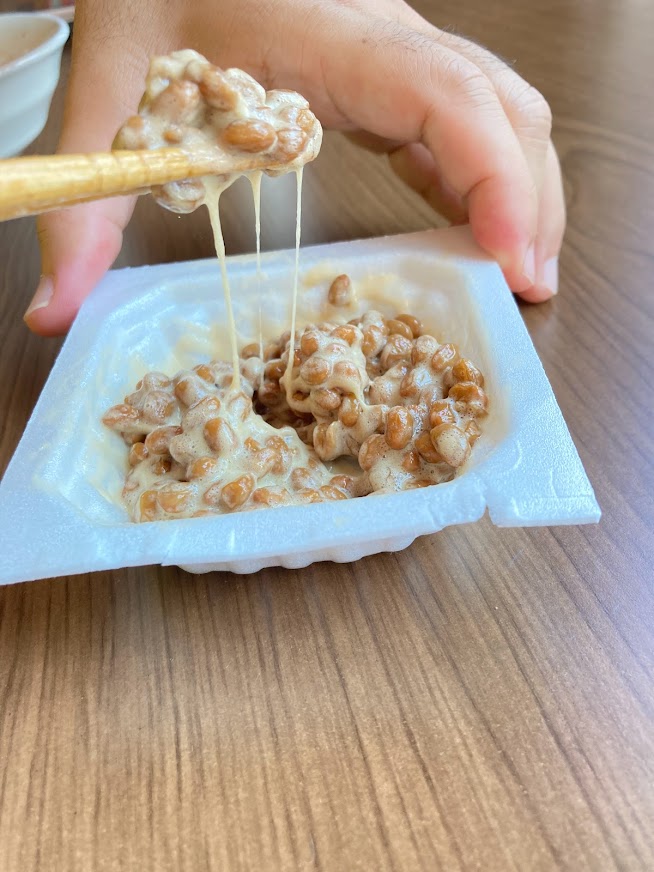
Now, it’s ready to eat! So, what do you think? Does it look delicious or a bit intimidating?
The flavor is savory and creamy, but be prepared—it’s going to be a messy experience! You’ll definitely have some sticky strings around your mouth, and that unique aroma will linger for a while. But that’s all part of the fun. Because of its bold flavor, it’s the perfect match for a bowl of hot steamed rice. Would you like to give it a try? They say you’ll either love it or hate it, but you’ll never know until you take that first bite!
Not a fan of the smell today? No worries! If you need a break from Natto but still want an authentic Japanese breakfast experience, you have to try our amazing bakeries. From the iconic Melon Pan to savory treats, find out why Japanese bread is taking the world by storm in my latest guide: 👉 [Japanese Bakery Guide: What Is Melon Pan & Why Japanese Bread Is So Popular (2025 Edition)

Best Toppings for Beginners (Mustard, Green onion, Kimchi)
Straight natto can be intense, so toppings are your best friend.
- The Classic: A dash of soy sauce and a dollop of karashi (Japanese mustard).
- The Refreshing: Chopped green onions (negi) add a nice crunch.
- The Flavor Bomb: Mix in some Kimchi. The spice and acidity of the kimchi perfectly balance the richness of the natto.
Final Thoughts
Natto might be the most challenging food in Japan, but it’s also one of the most rewarding. It’s cheap, incredibly healthy, and once you find your favorite topping—like raw egg or kimchi—you might just find yourself craving it every morning.
So, on your next trip to Japan, don’t just walk past it in the supermarket. Grab a pack, follow my guide, and join the “Natto Lovers” club!

コメント