
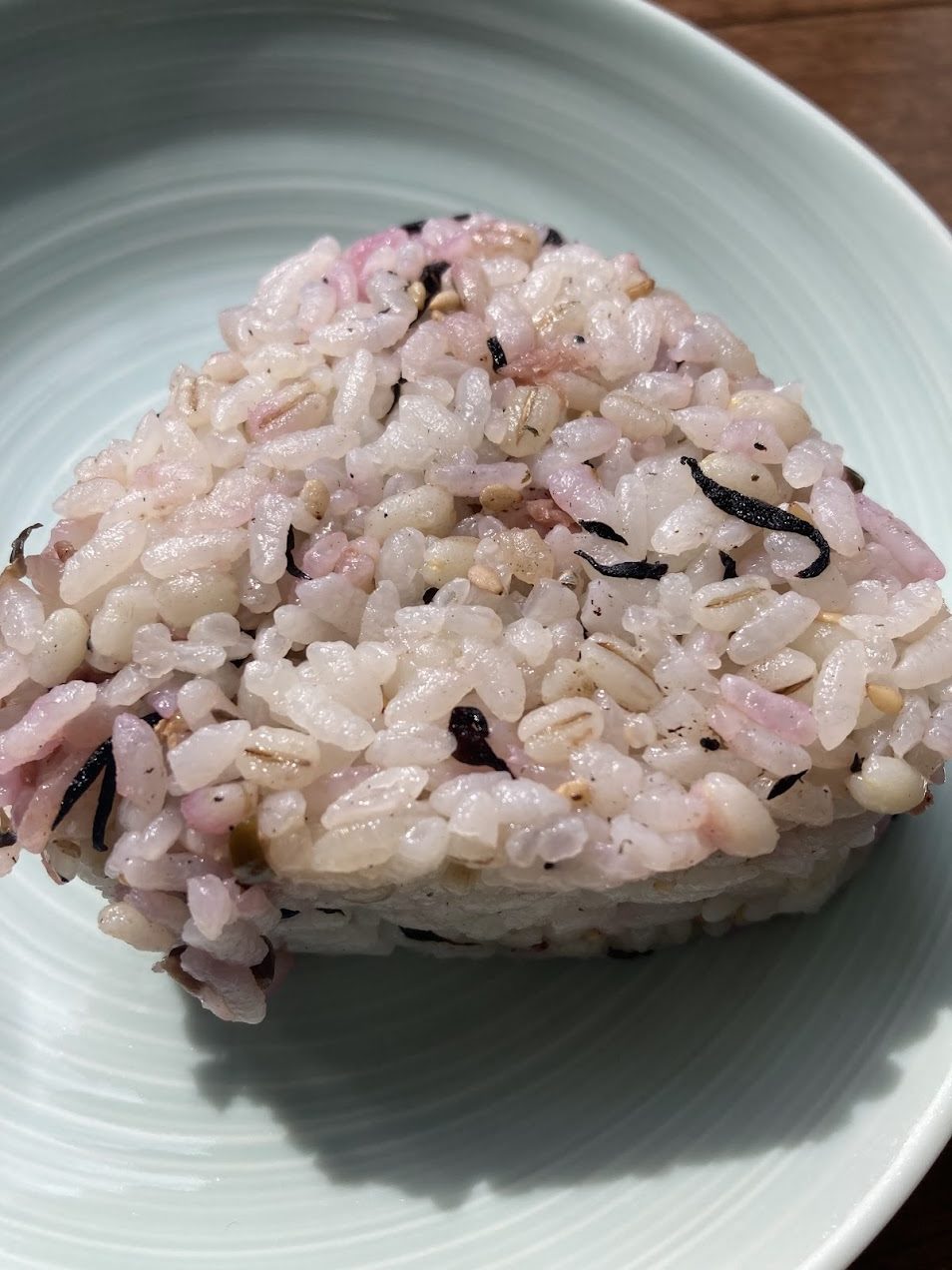
Have you ever been to a konbini in Japan? It’s part of everyday life here. If you forget something, no worries—just stop by a konbini. They’re always nearby, always helpful, and often surprisingly tasty.
What is a Konbini?
A konbini (Japanese convenience store) is a treasure trove of daily delights. You’ll find hot meals, fresh fruits, salads, main dishes, drinks, snacks, books, and even daily necessities—all neatly arranged and ready to go. And among these offerings, onigiri stand out as a true taste of Japan. In Japan, onigiri isn’t just a meal—it’s a go-to snack when you’re feeling a little hungry. Whether it’s a quick bite between meetings or a comforting treat on the train, Japanese people often reach for an onigiri. It’s simple, satisfying, and always close at hand—just like a warm hug wrapped in seaweed.

What is Onigiri?
Onigiri is a rice ball, usually shaped like a triangle and filled with savory ingredients such as grilled salmon or pickled plum (umeboshi). It’s lightly salted and wrapped in crisp, dried seaweed (nori), making it both portable and satisfying.
But konbini onigiri go beyond the basics. You’ll find varieties that reflect regional flavors, seasonal ingredients, and traditional Japanese tastes. These aren’t just snacks—they’re edible stories of Japan’s culinary heritage.
Real Japanese Taste Onigiri form Lawson
Lawson is one of Japan’s major konbini chains, and they offer a truly authentic Japanese onigiri. This one features rice with barley, pickled vegetables, perilla (shiso), and seaweed—a combination that feels both traditional and refreshing.
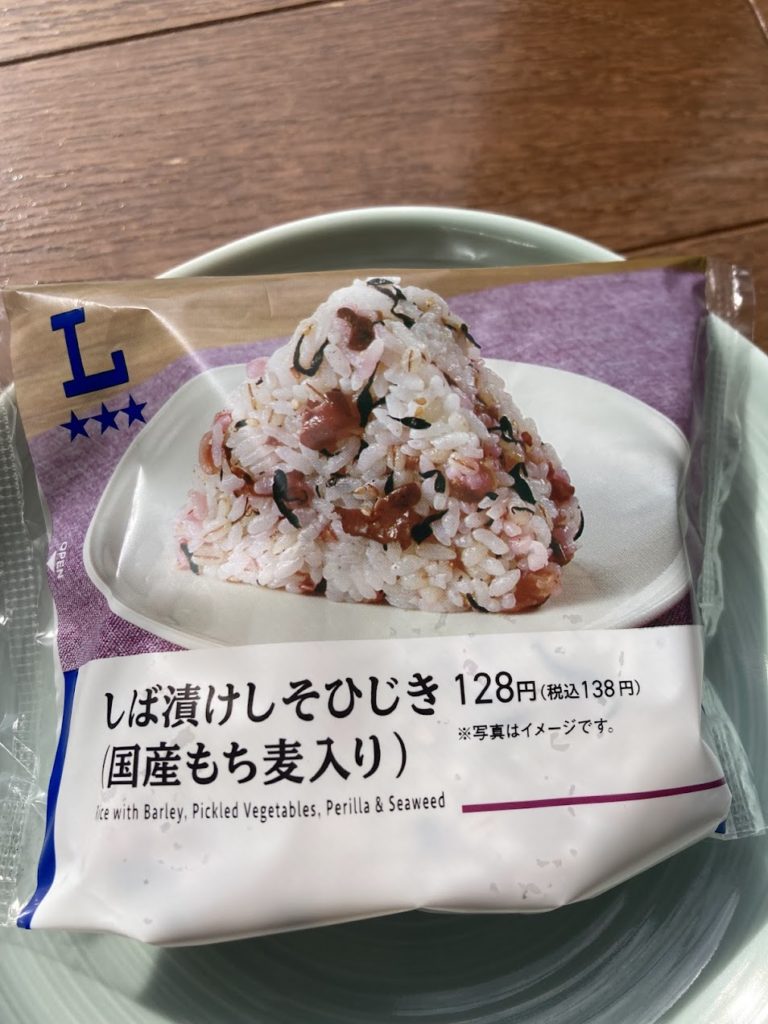
First, rice with barley is called mochimugi (もち麦) in Japanese. It’s known for being rich in beta-glucan, a type of soluble fiber that helps regulate blood sugar levels and lower cholesterol. Mochimugi is especially popular in Japan.
Unlike regular barley, mochi barley has a chewy, sticky texture—similar to mochi rice—when cooked. It’s often mixed with white rice to add extra fiber, vitamins, and minerals, making the meal healthier and more filling.
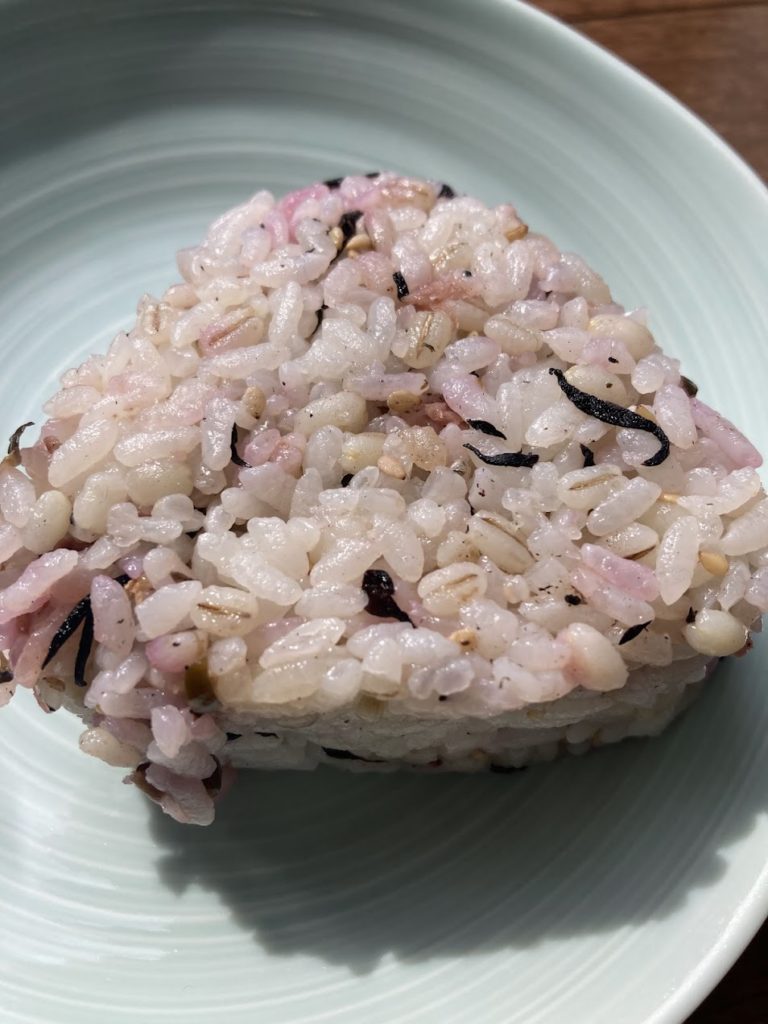
This onigiri features rice with barley, pickled vegetables, perilla, and seaweed. In this case, the pickled vegetable refers to shibazuke—a traditional Kyoto-style pickle made from chopped cucumbers, eggplants, and shiso leaves. It adds a tangy, slightly sour flavor that pairs beautifully with the earthy hijiki and aromatic perilla.
Hijiki is a type of edible seaweed. It is rich in dietary fiber, minerals such as calcium, iron, and magnesium, and is considered a healthy traditional Japanese food.
This onigiri is surprisingly chewy, with just the right amount of crunch. The crunchy texture adds a pleasant contrast, and the sourness from the pickled vegetables pairs beautifully with the rice. Hijiki brings a slightly firm bite, adding depth to the soft rice base.
Shibazuke and rice have been loved by Japanese people for generations. With just one bite, you can taste the essence of traditional Japanese flavor. And as a bonus—it’s healthy and rich in dietary fiber!
If you’d like to know more about konbini life in Japan, feel free to check out my article below! It’s full of everyday charm and delicious discoveries.
Summary
Each major konbini in Japan offers seasonal or limited-edition onigiri. Onigiri is so popular here that new flavors are released one after another! Every time I visit a konbini and spot a new onigiri, I just can’t resist—I end up buying it! It’s always fun, and always delicious.


コメント