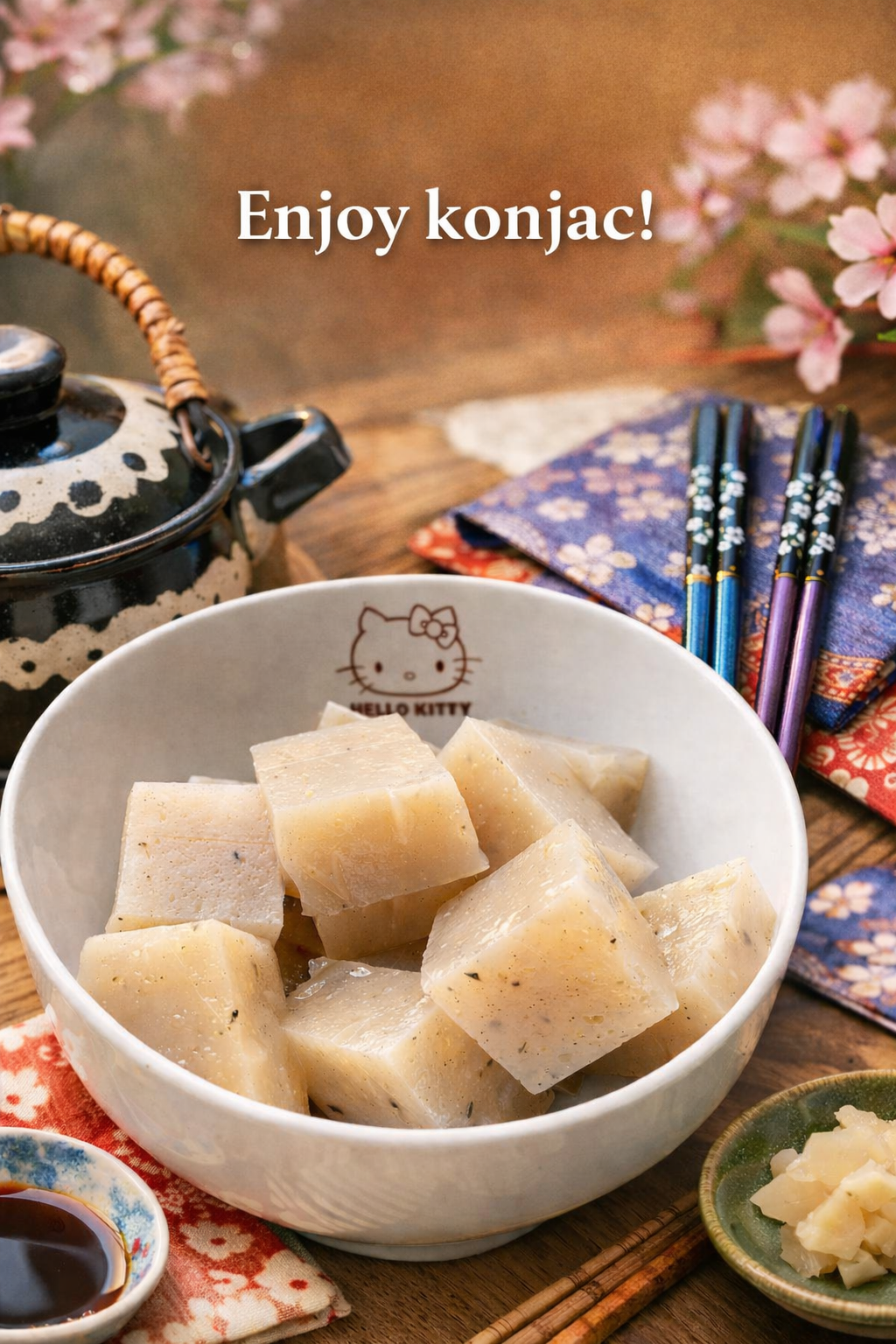
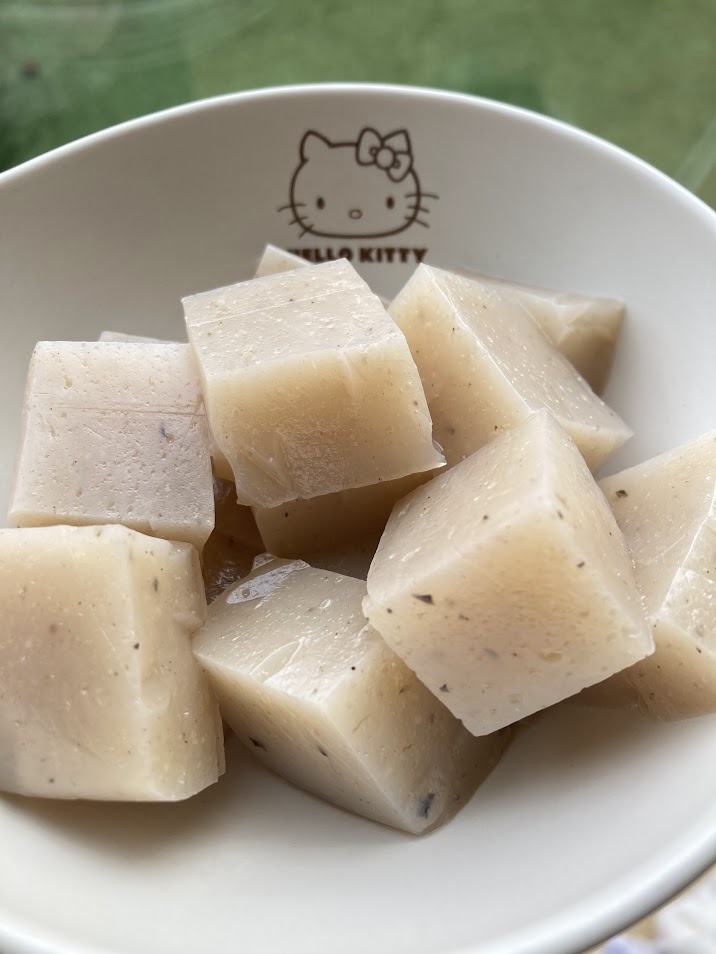
If you love Japanese food or you’re planning a trip to Japan, you may have seen a mysterious, jelly-like grey block called konjac (konnyaku). It looks unusual, the texture is chewy, and many visitors wonder: “What exactly is konjac, and how do you eat it?” Don’t worry — this guide explains konjac in a simple way, with examples and tips for first-time visitors.
Konjac (konnyaku) is a traditional Japanese food made from the konjac root, a plant high in fiber and extremely low in calories. It’s been eaten in Japan for more than 1,000 years.
Key features:
Jelly-like, bouncy texture
Almost no smell or flavor
Very low calories
High in dietary fiber
Because it absorbs flavors well, it’s often cooked with broth, miso, or soy sauce.
スポンサーリンク
What Does Konjac Taste Like?
By itself, konjac tastes very mild. The real flavor comes from the seasoning or broth you cook it in.
Foreign visitors usually describe konjac as:
“chewy”
“bouncy”
“like firm jelly”
スポンサーリンク
How Konjac Is Used in Japanese Cooking
You’ll commonly see konjac in:
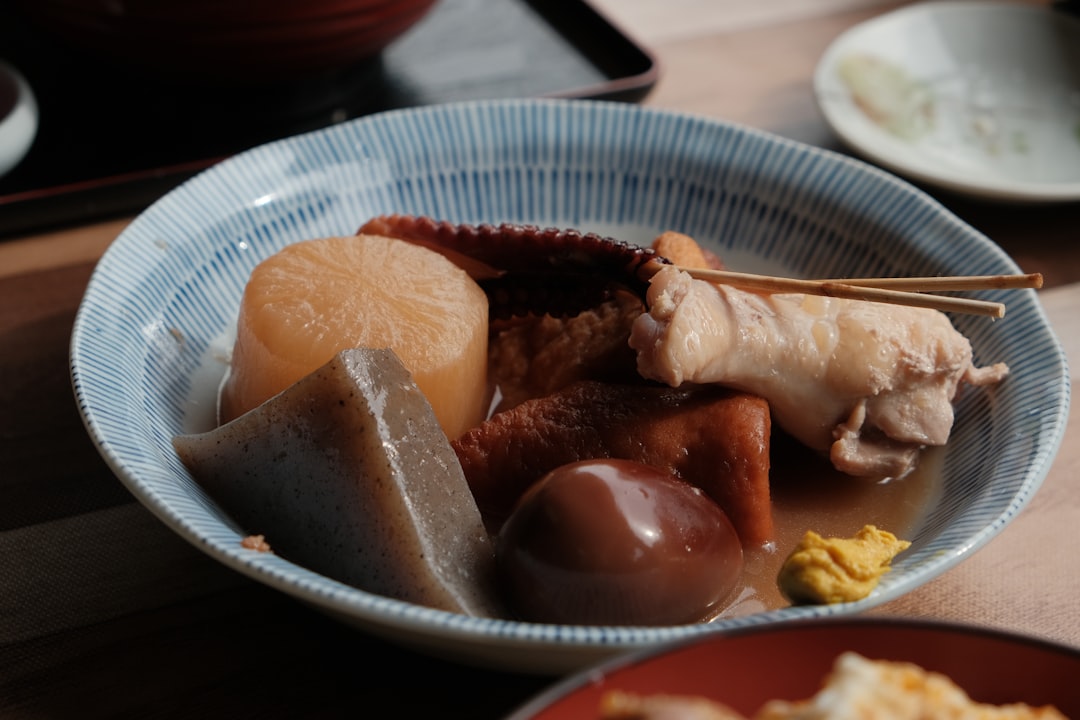
1. Oden
A warm broth dish sold in convenience stores in winter. Konjac absorbs the broth and becomes flavorful.
2. Nimono (simmered dishes)
Konjac is simmered with vegetables, soy sauce, and dashi.
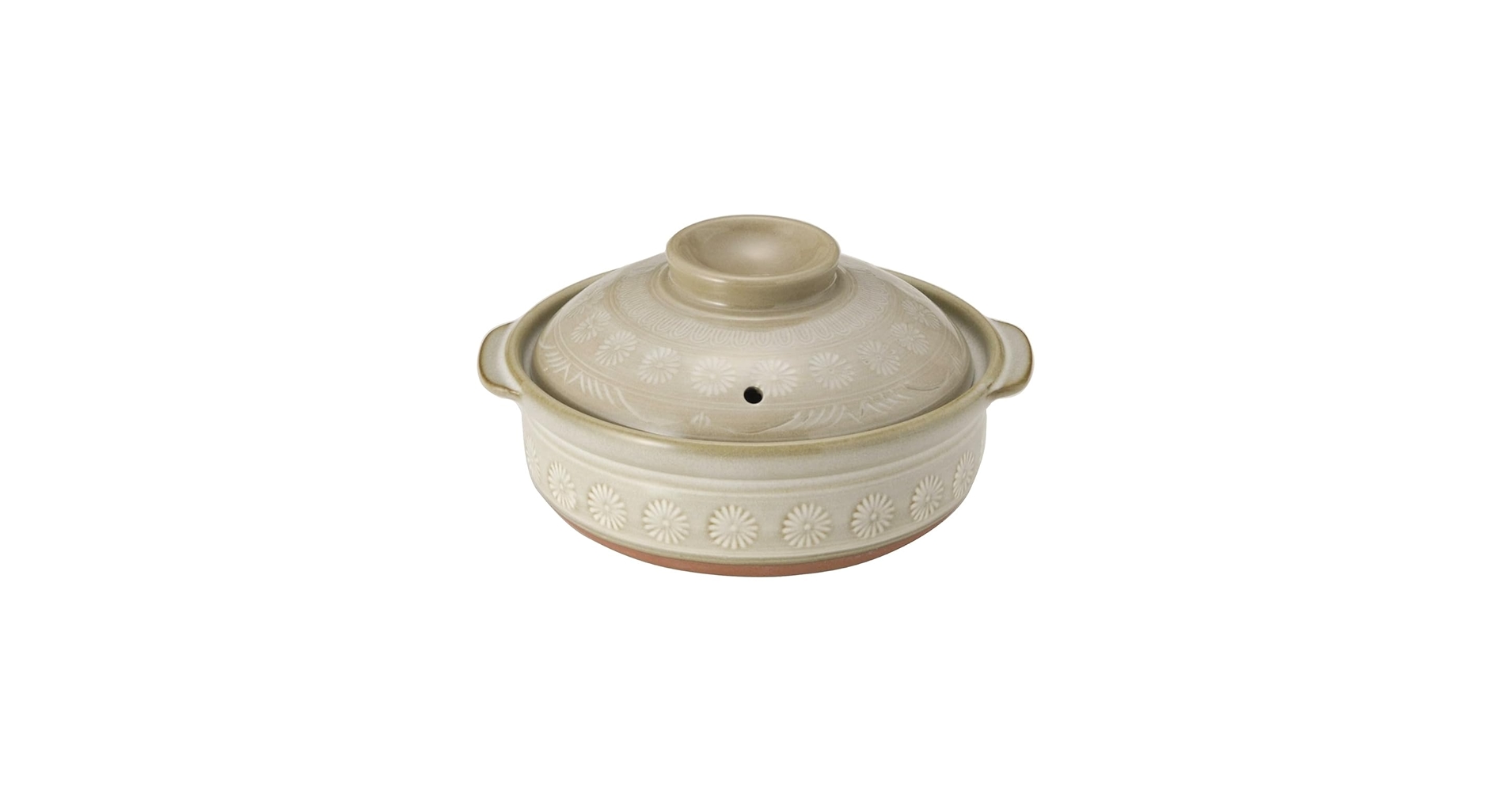
Konjac tastes especially good when it’s soaked with flavor in oden or simmered dishes. Outside Japan, it’s not something you can easily find, so many people recreate these dishes at home. A Japanese donabe pot works beautifully for both oden and nimono, helping the flavors develop slowly and evenly.
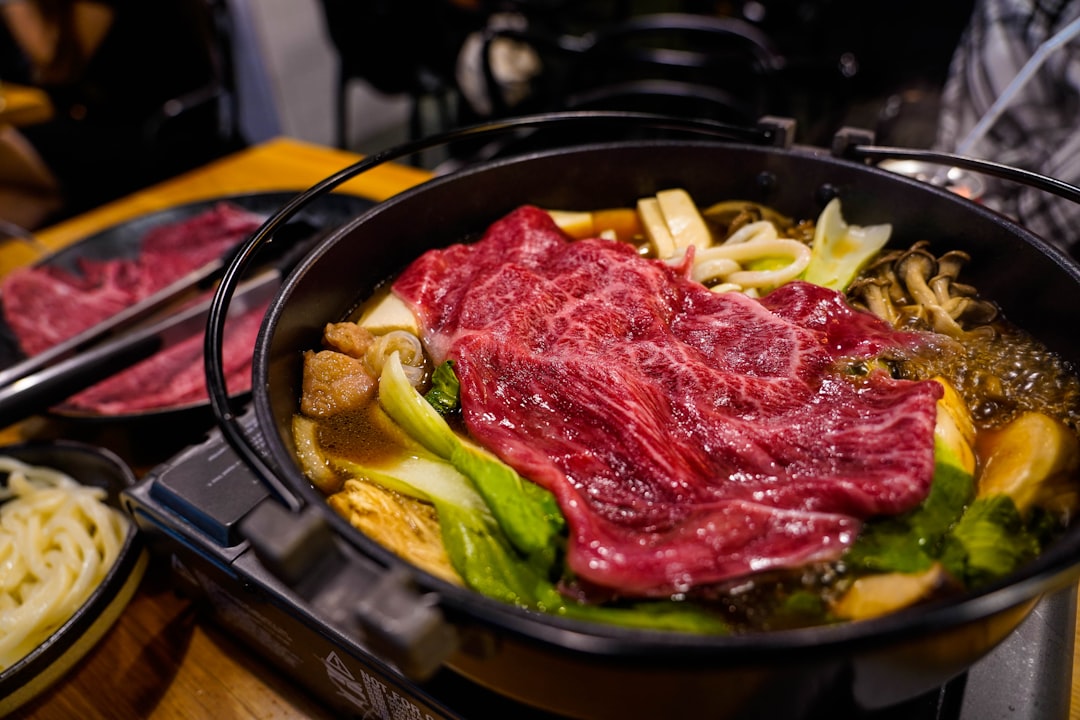
Konjac is one of the most unique and healthy traditional foods in Japan. If you’re visiting Japan, try it in oden, hot pot, or simmered dishes — the texture may surprise you!
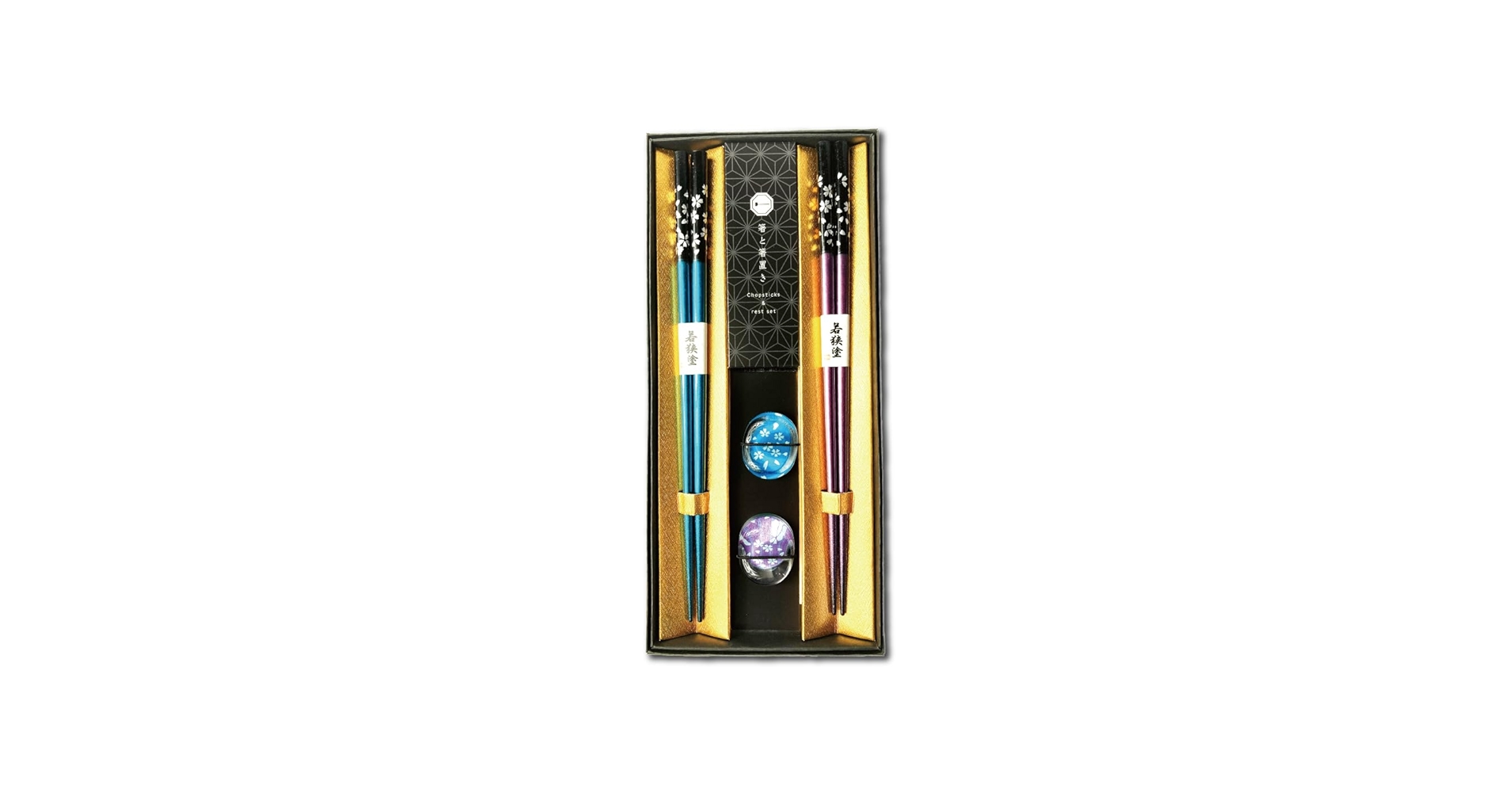
Once you try it, you’ll notice how surprisingly slippery konjac is! Japanese food is usually eaten with chopsticks, but picking up konjac can be a real challenge—even for locals. That little struggle is part of the fun. Why not try eating konjac at home with a beautiful pair of Japanese-style chopsticks and enjoy the experience for yourself?


コメント